
See how the fortnight actually went.
Andy asks clients how each day went, and they can send you a report before the next session.
- They send it, you read it
- Nothing to install
Before the session,
the whole period in one report.
Every day,
their own words, dated.
Across the weeks,
the days that went worse.
Between sessions,
short guides and breathing.
Andy for therapists
- Check-in based on the GAD-7
- 5 stars on the App Store
What you have before the session starts
Your client writes down how each day went in their own words. When they want you to see it, they pick a period and send you a report of it.
Recall bends towards the last few days
A client remembers the week they have just had. A daily log covers the whole stretch, including the one they would have waved off on the way in.
Their words, with the score beside them
The report carries what they wrote and when, with their check-in scores next to it. You read the entry as they left it that day.
It sits alongside your work
Andy is self-guided and says so to the people using it. It does not diagnose, and anyone in immediate danger is pointed to emergency services.
What actually reaches you
A report before the session
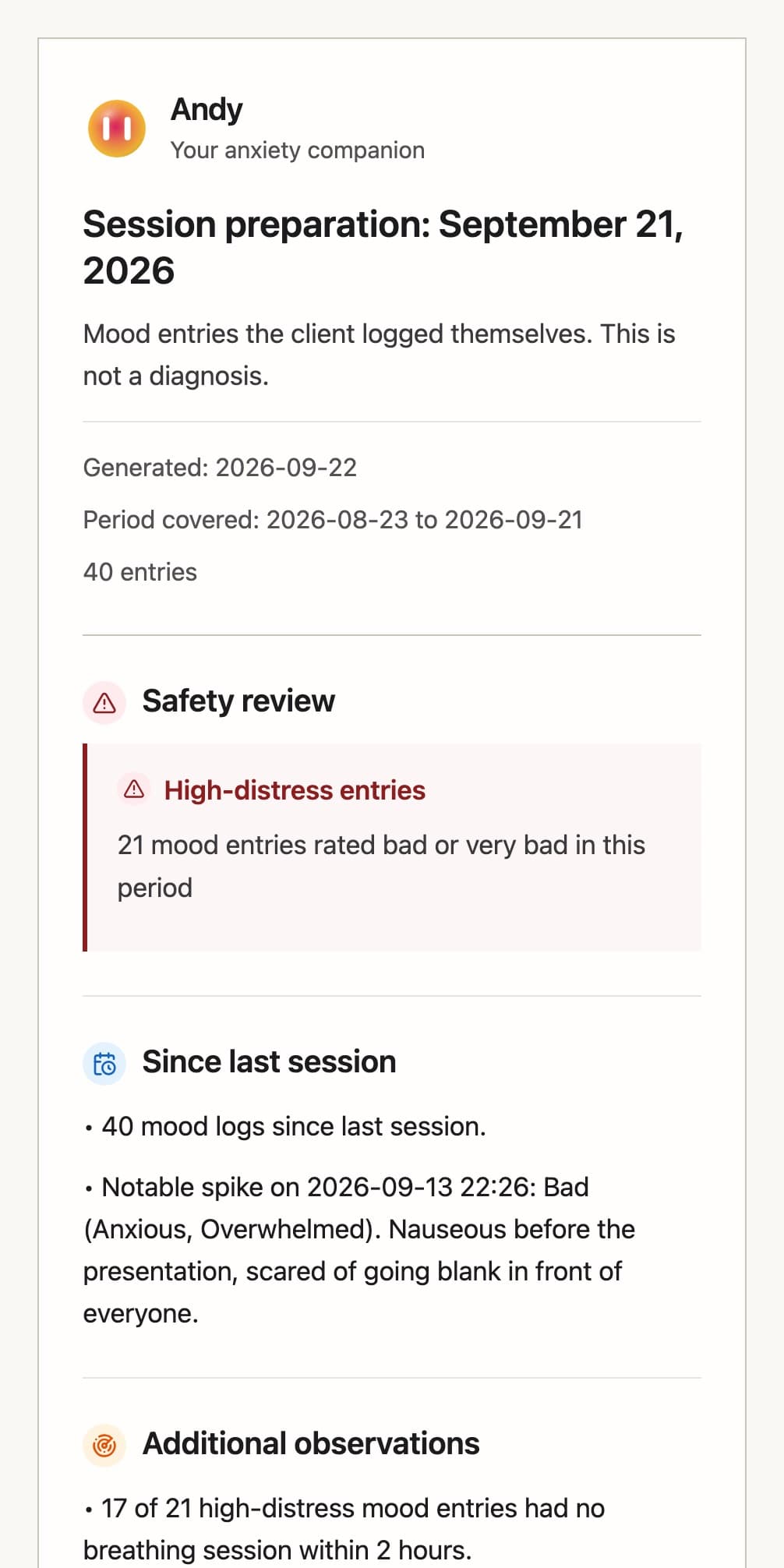
Your client picks a period and sends it to your email. It opens in a browser: the safety review first, then what has changed since you last met.
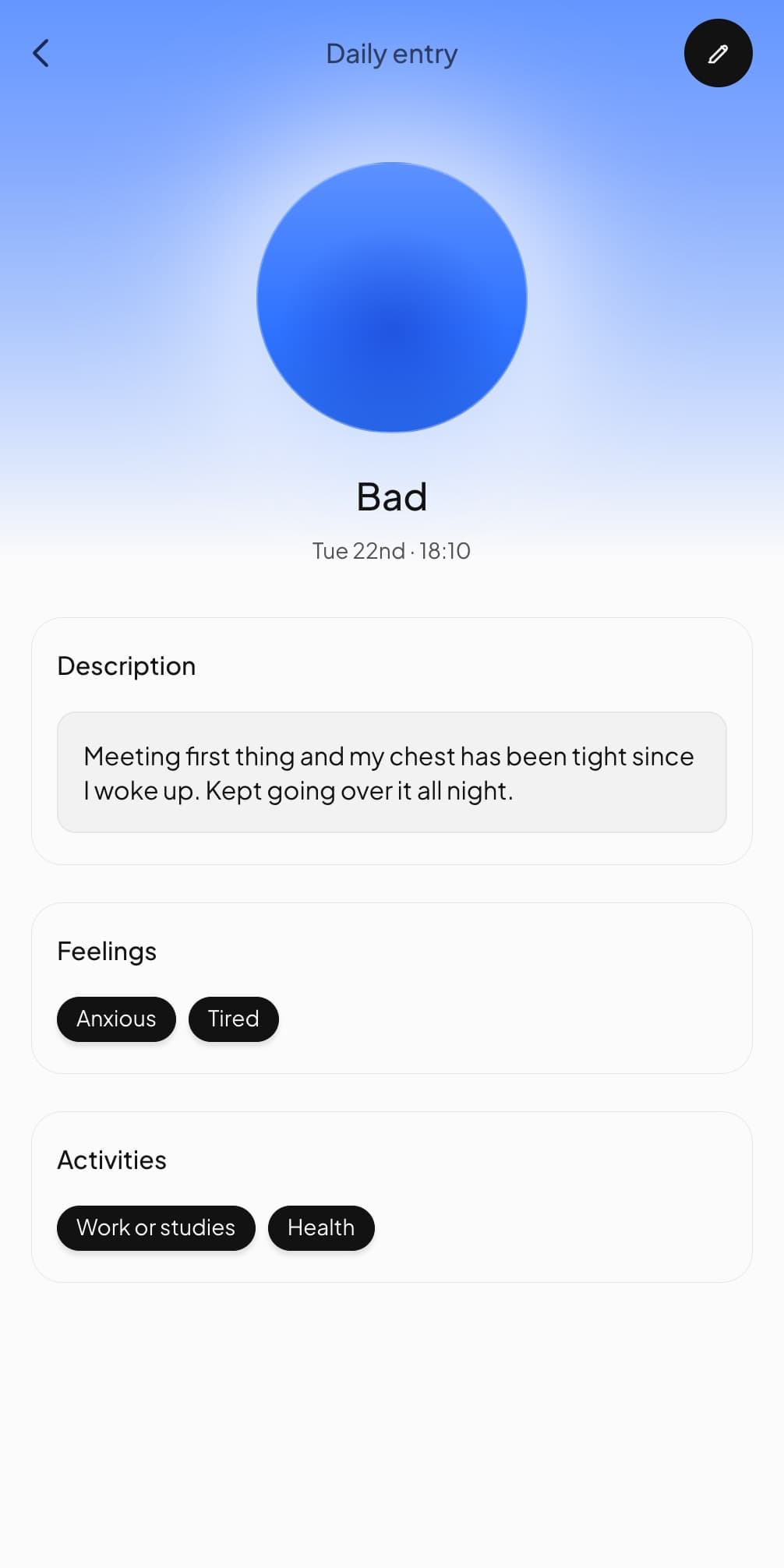
Their own words, dated
A daily entry takes a few seconds: how the day went, a line about why, and the feelings behind it. That line is what you read back in the report.
The shape of the period
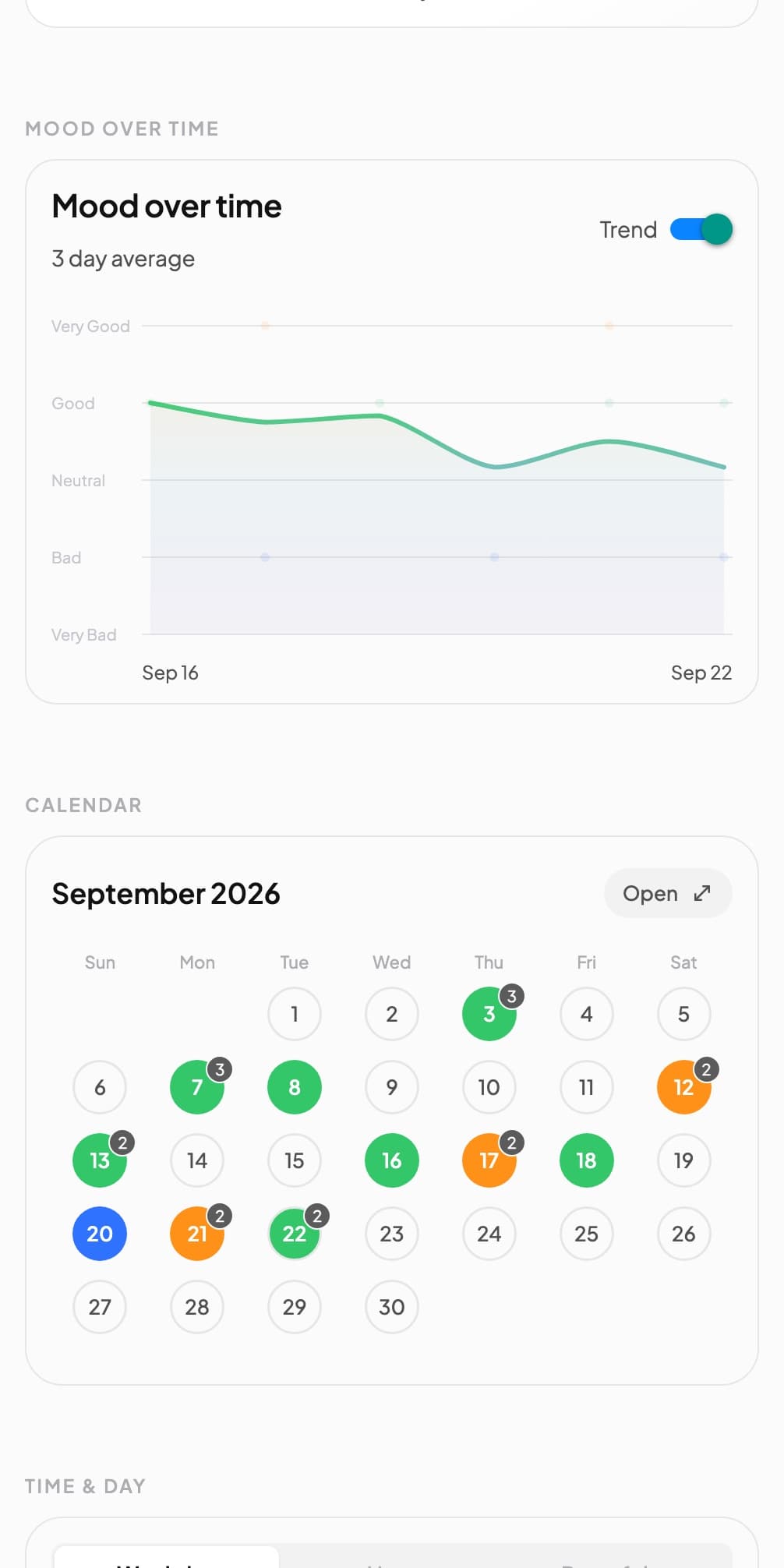
Mood across the weeks, the days that went worse than the rest, and what tends to sit alongside them. You see the run-up to a bad week instead of hearing about it after.
What they practised in between
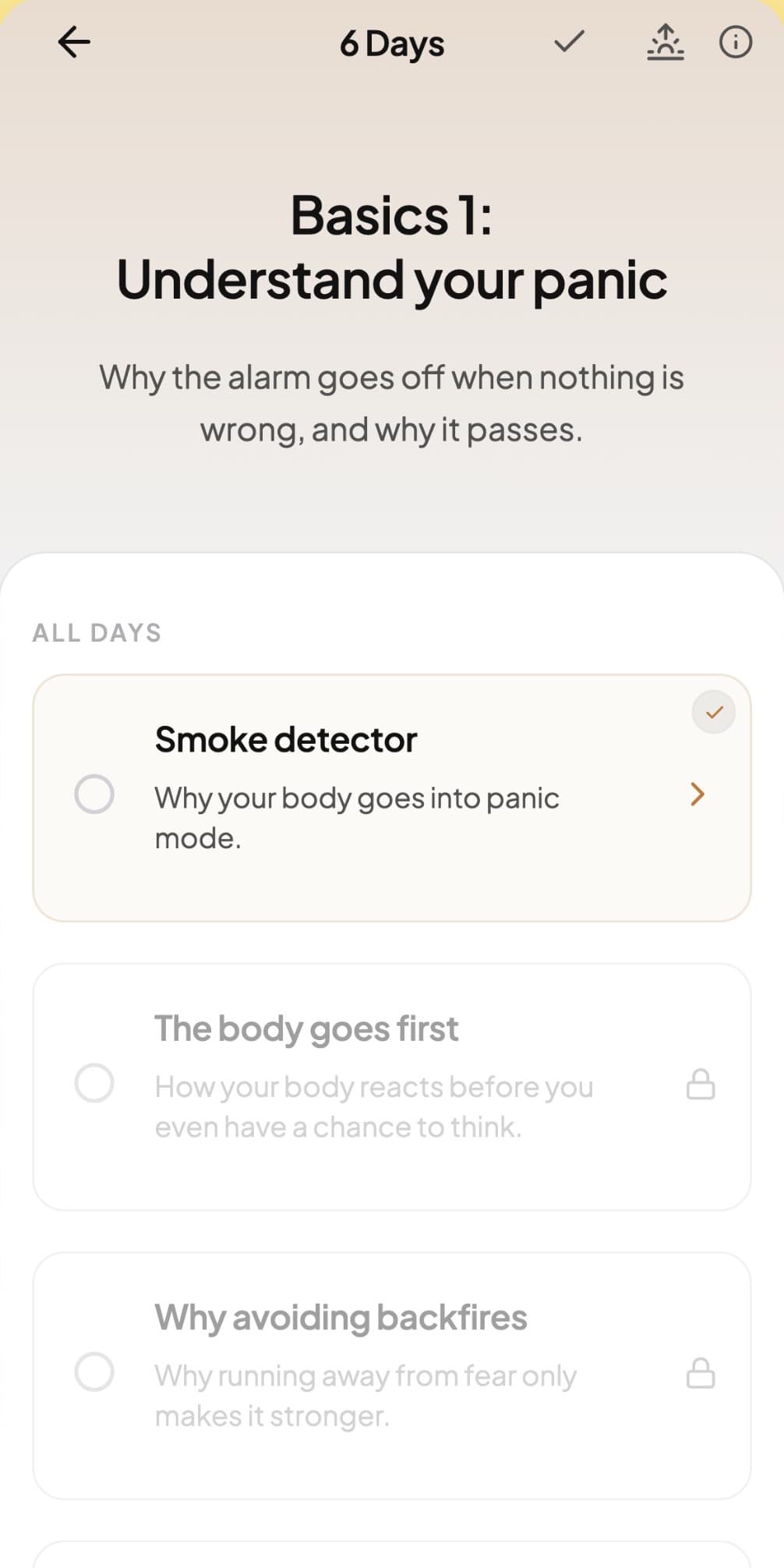
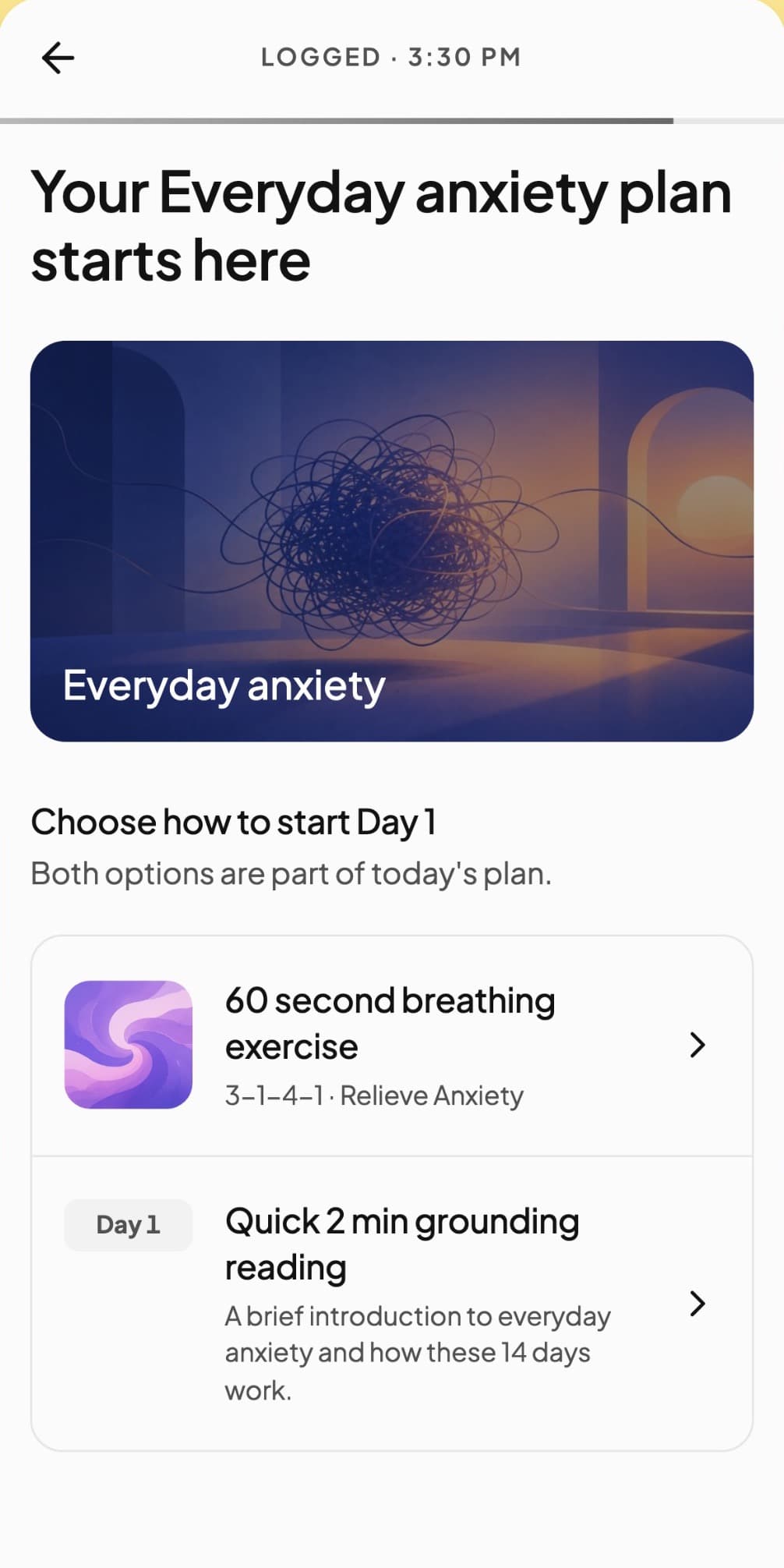
Short sessions from their own 14-day plan: breathing, a grounding exercise, or a question to sit with. The report lists which ones they used.
Your client decides what you see.
Andy belongs to the person using it. A report reaches you because they sent it, and they can switch the link off whenever they want.
What does not exist
- No clinician login
- No access to their entries
- No alerts or monitoring
- No report you did not receive from them
What the report holds
A safety review, what has changed since the last session, patterns across the period, the coping exercises they used, and the full mood log at the back.
Built so you can check it
- The check-in is the GAD-7: seven questions, scored 0 to 21, with the usual cut-offs.
- The first page of the report says what it is: mood entries the client logged themselves, for discussion, not a diagnosis.
- No ads, no sponsors and no data sold. Andy is made by a small studio in Girona.
The full report a client would send you
Built from a sample fortnight, so you can read one before you mention Andy to anyone. It comes with a short page you can hand a client who asks what it is.
- Your client downloads Andy and starts logging
- They choose the period and send the report to you
- No account for you, nothing to install
The questions we usually get
Is Andy therapy?
No. It is a self-guided app for the days between sessions, and it says so to the people using it. It does not diagnose, and it does not replace the work you do with a client.
Do I need an account?
No. The report opens in a browser from the link your client sends. There is nothing for you to install and nothing to sign into.
What does it cost my client?
Daily logging, all the breathing exercises, the report they send you, exports, stats for the last 30 days and the first day of every guide cost nothing. The paid part is history beyond 30 days, the full guides and Apple Health.
Can I see the report before I recommend it?
Yes. The sample report is the same document Andy produces, built from a demo account rather than a real client.
What if a client is in crisis?
Andy says so rather than trying to handle it. Anyone in immediate danger is pointed to local emergency services, and the app is clear that it sits alongside real care rather than instead of it.